
Date Posted: 2026-11-12
Going more than 10 years without pumping a septic tank can turn routine maintenance into a difficult cleanup and an urgent repair situation. On a recent Allto Construction service call, the consequences were clear: a tank packed with accumulated solids, a home experiencing backups and a septic bed already showing advanced failure.
The system was in the later stages of its life. However, the lack of pumping and maintenance had accelerated its deterioration. This job shows why regular service, accessible tank lids and attention to the whole system matter.
First, we had to find the septic tank
The property had no accessible tank risers, and nobody knew where the tank was located. Before we could assess its condition or begin pumping, our crew spent considerable time locating and exposing it.
Buried access points make every service visit more difficult. They can also contribute to maintenance being put off: the tank is out of sight, its location is forgotten and years pass without anyone checking it.
Knowing where your tank is located and keeping a record of previous service are basic parts of owning a septic system. Accessible lids make it much easier to follow through.
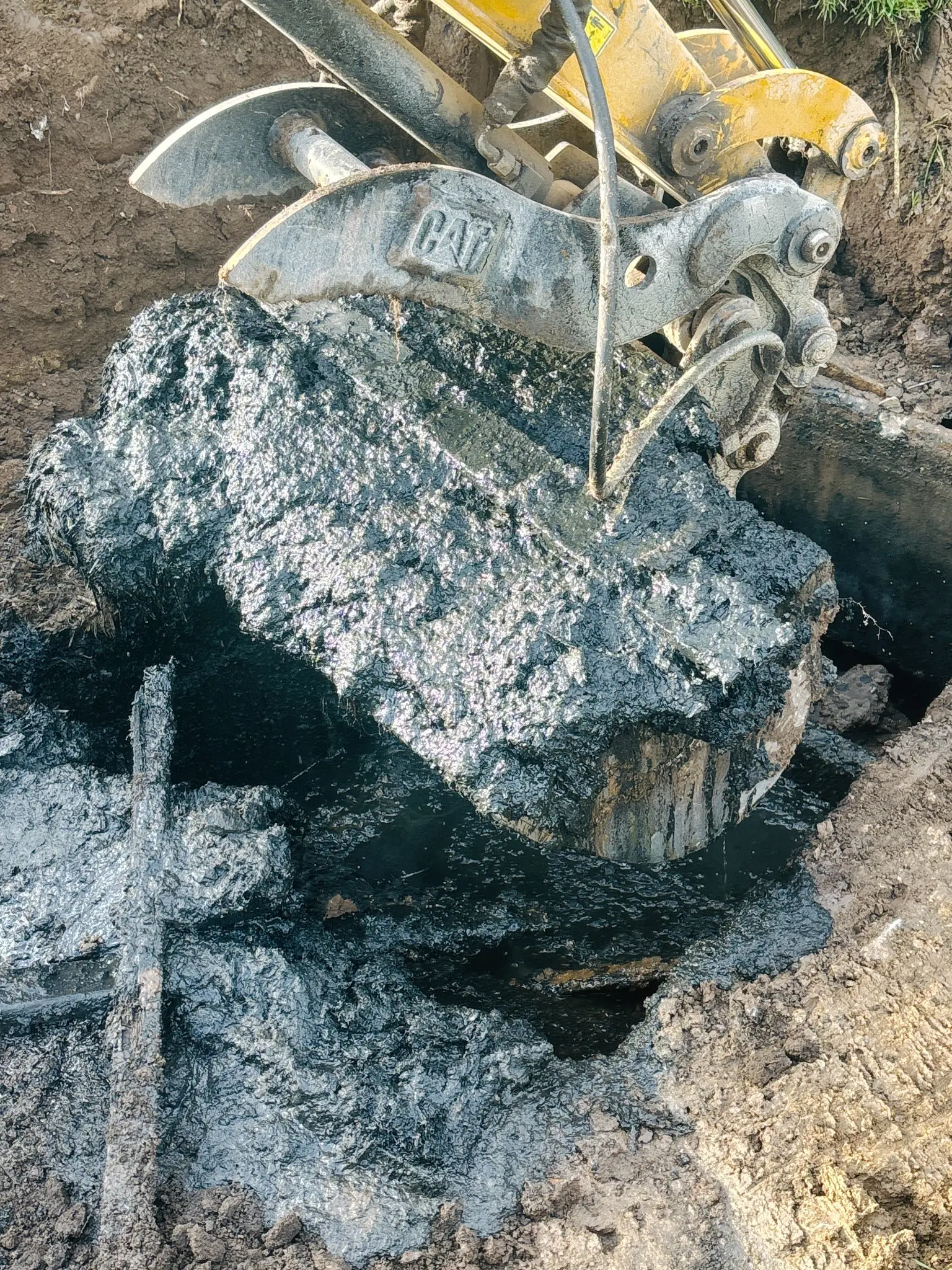
At this property, accumulated solids were too thick for the pump truck and had to be physically removed with a small excavator.
The contents were too thick for the pump truck
Once we opened the tank, we found accumulated waste that was nearly solid all the way to the top. The material was too thick for the pump truck to remove.
We had to remove the tank lid and use a small excavator to physically remove the accumulated solids. What should normally involve a pump truck and routine servicing had become a much more involved operation.
This was an exceptional cleanup, not a normal pumping procedure. It also illustrates an important distinction: a septic tank normally contains liquid during operation. The concern here was the extreme accumulation of solids, not simply that the tank looked full.
Solids had already reached the septic bed
A septic tank is intended to retain solids while wastewater moves onward for further treatment and disposal. Pumping removes accumulated material so the tank can continue doing that job.
At this property, solids had been carrying into the septic bed, contributing to blockages and reducing its ability to accept wastewater. The home was backing up, and the system was in an advanced state of failure.
Removing the tank contents did not reverse the damage already done downstream. Further assessment was needed to determine the appropriate repairs or whether replacement would be necessary.
We cannot say regular pumping would have made an older system last indefinitely. We can say that neglected maintenance contributed to its deterioration and left the owner facing an emergency repair or potential replacement situation.
How often should a septic tank be pumped?
A general recommendation is to have a septic tank pumped every three to five years. The right interval depends on tank size, household use, the system's condition and measured solids accumulation. Some properties need pumping sooner.
That guideline should not become a reason to ignore a developing problem until the next scheduled date. If you cannot remember the last pump-out, arrange an assessment rather than waiting for a backup.
Our guide to what happens during a septic tank pump-out explains the service and why access to the tank matters.
Accessible risers make maintenance easier
Properly installed risers bring tank access up to finished grade, reducing the need to locate and excavate buried lids at each visit. They make pumping, inspections and filter servicing easier to arrange and carry out.
Risers need to suit the tank, seal properly and have secure lids. Accessible does not mean leaving a tank open or allowing children access.
If your lids are buried, ask about suitable risers during your next visit. Our septic tank riser article explains the practical benefits.
Pumping and annual maintenance serve different purposes
Pumping is one part of septic care. Regular inspections can identify concerns with accessible components before a backup becomes the first sign of trouble.
Ask Allto about an annual maintenance service suited to your system. Depending on the equipment installed, visits can include effluent filter cleaning, pump and float checks, alarm checks, and reviewing accessible lids and treatment components.
Advanced treatment systems have their own servicing requirements. Follow the applicable manufacturer's schedule and maintenance agreement. An annual maintenance visit does not automatically mean the tank needs pumping every year; pumping should follow the system's actual needs.
Our septic repair and maintenance services help owners plan those checks and address concerns.
Do not wait for an emergency
If your home is backing up or a septic alarm activates, reduce water use and call for service promptly. Pumping may help manage the immediate situation, but the underlying cause still needs to be investigated.
Allto Construction provides scheduled septic pumping, inspections, maintenance and 24/7 emergency septic pumping across our South Central Ontario service area.
Call 1-800-265-3348 to book service or get help with an urgent septic problem.