
Date Posted: 2026-08-21
How to Find Your Septic Tank and Lids Before a Pump-Out
If you're scheduling a septic tank pump-out, one of the first questions you may be asked is whether the septic tank and access lids are exposed.
For homeowners who have lived in the same house for years, the answer may be easy. But if you've recently purchased a rural property or have never had your septic tank pumped, you may have no idea where the tank is located.
That's more common than you might think.
Knowing where your septic tank and access lids are located can make routine pumping and maintenance easier and may reduce the time required for a service technician to access your tank.
Here's where to start.
Where Is a Septic Tank Usually Located?
In a conventional septic system, wastewater leaves the house through a building sewer and flows into the septic tank. From the tank, effluent travels onward to the leaching bed or other treatment components.
Because of this layout, the septic tank is normally located somewhere between the house and the leaching bed.
However, there is no universal distance or location that applies to every property.
Older homes can be particularly challenging. Landscaping may have changed, additions may have been built, previous owners may have covered access points, and records may be incomplete.
Never assume you know where a septic tank is based only on where the lawn looks different.
Start With Your Septic System Records
Before you start digging, look for documentation.
Depending on the age of the property and system, there may be a septic permit, site plan, installation drawing or other documentation showing the approximate location of the tank and leaching bed.
If you recently purchased the property, check the documents you received during the purchase.
You may also be able to obtain records from the local building department or other authority having jurisdiction, depending on where the property is located.
Keep in mind that an old drawing may not identify the tank's exact position, and what was actually installed may differ somewhat from a drawing.
Treat the plan as a useful starting point rather than a guarantee.
Follow the Sewer Line Leaving the House
Another clue is the location where the main building sewer exits the house.
If you have access to the basement, crawlspace or mechanical area, you may be able to identify the main sewer pipe and determine which side of the house it exits.
The septic tank will generally be located in that direction.
This can significantly narrow your search area.
However, sewer pipes can change direction underground, so don't assume the tank must be directly in line with the pipe you see inside the house.
Look for Visible Septic Risers or Lids
Many newer systems—and older systems that have been upgraded—have access risers extending to or near finished grade.
These make the tank much easier to access for pumping, inspection and maintenance.
Look around the expected tank location for round access covers or lids.
They may be:
-
At lawn level
-
Slightly below the grass
-
Incorporated into landscaping
-
Covered by a relatively shallow layer of soil
If you're not sure whether something is part of your septic system, don't open or disturb it unnecessarily.
Septic tanks contain wastewater and potentially dangerous gases, and access covers should be handled carefully.
If your existing tank lids are buried, our guide to septic tank risers explains how risers can improve access for future pumping and maintenance.
Can You Use a Probe to Find a Septic Tank?
Experienced septic professionals have several methods of locating buried tanks and system components.
A homeowner may be tempted to start pushing rods or probes into the ground, but caution is warranted.
Underground properties can contain electrical, gas, communications, water and other services. Septic components can also be damaged by aggressive probing or digging.
If the location isn't reasonably obvious, calling an experienced septic service provider may be the better option.
Should I Dig Up My Septic Tank Before the Pump Truck Arrives?
If you know exactly where the access lids are and can expose them safely, having them accessible before your scheduled appointment can make the pump-out more efficient.
If you're preparing for an upcoming service, learn more about Allto Construction's septic pumping services throughout South Central Ontario.
At Allto Construction, we recommend discussing access when booking your pumping appointment so you know what is expected before the truck arrives.
If you aren't certain where the lids are located, don't excavate a large area of your yard hoping to find them.
Let the service provider know when you book the appointment that the tank or lids are not exposed.
How Many Septic Tank Lids Need to Be Exposed?
This depends on the tank and system.
Some tanks have multiple compartments and access points. Proper access allows the technician to perform a more complete service and observe the condition of accessible components.
Don't assume that uncovering the first small lid you find necessarily provides all the access required.
When booking your service, ask what needs to be exposed.
Consider Installing Septic Tank Risers
If your tank lids are buried, digging them up every time the tank requires pumping or inspection becomes inconvenient.
Access risers extend the tank openings toward finished grade so they can be reached without repeated excavation.
For many homeowners, installing risers during a pump-out is worth considering because the tank is already accessible.
If your septic tank lids are buried, read our guide to septic tank risers to learn how they work and whether installing them makes sense for your system.
Risers can make future:
-
Septic pumping
-
Inspections
-
Filter cleaning
-
Maintenance
-
Troubleshooting
simpler and faster.
Don't Drive Heavy Equipment Over the Septic System
While locating your tank, remember that septic tanks and leaching beds are not areas where vehicles or heavy equipment should be travelling unless the system has specifically been designed for those loads.
Driving over septic components can damage tanks, piping and the leaching bed.
This also matters when the pump truck arrives.
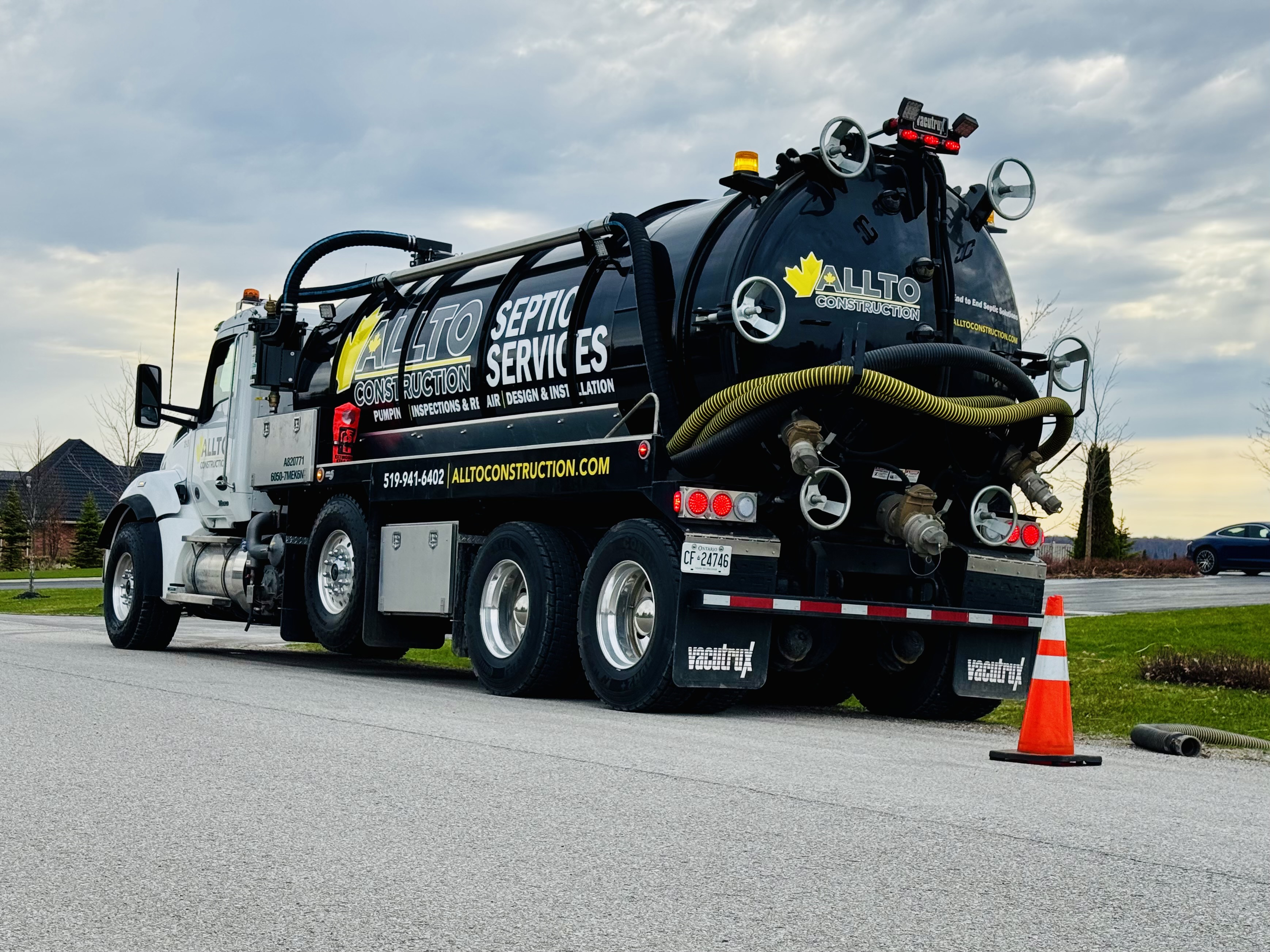
A septic pumping company should determine an appropriate location for its truck and hose rather than simply driving across the septic area.
What If You Still Can't Find the Septic Tank?
Don't panic.
Missing or poorly documented septic locations are something experienced septic contractors encounter regularly.
Provide the service technician with as much information as you have, including:
-
Any septic drawings or permits
-
Approximate age of the system
-
Location of the sewer leaving the house
-
Information from the previous homeowner
-
Where you believe the leaching bed is located
-
Previous pumping or inspection records
The more information available, the easier it may be to narrow down the location.
If you're experiencing a problem with the system rather than simply preparing for routine pumping, Allto also provides septic system repair and maintenance services throughout South Central Ontario.
Once You Find It, Keep a Record
After the tank has been located, don't make the next owner—or yourself five years from now—go through the same exercise again.
Record the location.
Take photographs showing the lids in relation to permanent landmarks. Keep a copy of the septic plan with your property records and record the date of each pump-out.
Regular septic pumping is an important part of maintaining a septic system. The appropriate pumping interval depends on tank size, household use, solids accumulation and other factors.
Not sure when your tank should be serviced? Read our Ontario Septic Pumping Guide for information about pumping frequency, costs and common signs that your tank may need attention.
Need Your Septic Tank Pumped?
Allto Construction provides septic pumping, maintenance and repair services throughout South Central Ontario.
Our team has been working with septic systems since 1969 and services both residential and commercial properties.
If you don't know where your septic tank is located or aren't sure whether the lids need to be exposed before your appointment, let us know when you call.
Contact Allto Construction to schedule septic pumping service.
Blog Images


SINCE 1969.